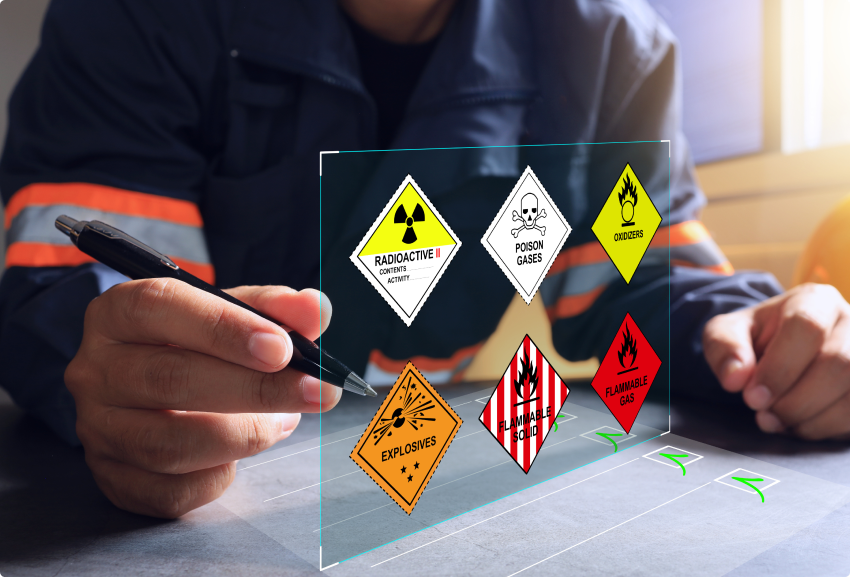
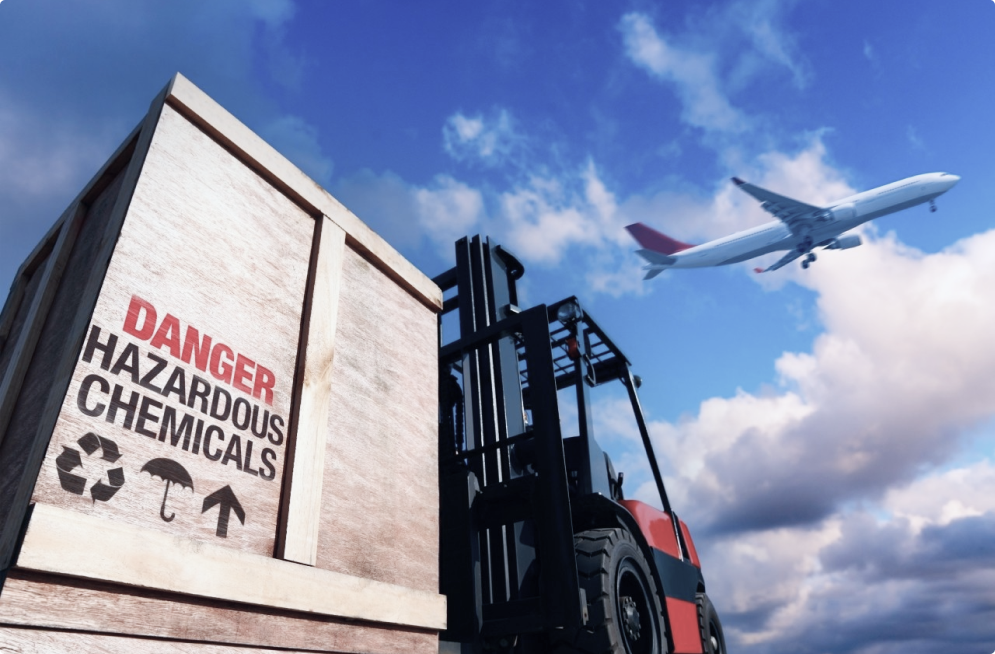
Handling dangerous goods for cargo involves rigorous processes to ensure safety and compliance throughout transportation. The first step is classification, where substances are categorised based on their properties and hazards, determining packing groups and subsidiary risks. Documentation and compliance follow, requiring accurate shipping declarations, safety data sheets (SDS), and obtaining necessary permits.
Packaging and marking are crucial to prevent leaks or reactions, using appropriate materials and labels to indicate contents and hazards. Safe handling practices are essential during loading, unloading, and transport by air, sea, road, or rail, adhering to strict regulations like IATA DGR, IMDG Code, ADR, and RID.
Emergency preparedness completes the process, with plans in place and contacts maintained for responding to incidents involving dangerous goods. Through these measures, freight forwarders ensure the secure transport of hazardous materials, safeguarding against risks to people, property, and the environment.
For Dangerous Goods Services reach out and let’s start a conversation